
Work-Related Ankle & Foot Injury Lawyers
Santa Ana, California
Experienced Ankle & Foot Injury Attorneys in Santa Ana, CA
Ankle and foot injuries can immediately disrupt your ability to stand, walk, or perform your job. When these injuries result from unsafe working conditions, you have the right to seek medical treatment and compensation under the law.

Why Clients Choose Fontes Law Group
Experience. Compassion. Results.
We represent injured workers throughout California who need help when a job injury turns their life upside down. When you’re hurt, you deserve a legal team that acts fast, understands how the system works, and keeps your recovery front and center.
-
Extensive experience with complex orthopedic and workers’ compensation claims
-
Spanish-speaking attorneys and staff available
-
Convenient offices in Santa Ana and Riverside
-
No legal fees unless your case is successful
-
Trusted by workers and families across California

Meet Rosa Duarte
Workers Compensation Hearing Representative
Understanding Ankle & Foot Injury Claims in California
Ankle and foot injuries can happen in an instant or develop slowly over time. Many workers are injured by a sudden fall or impact, while others experience cumulative trauma from repetitive movement, prolonged standing, or physically demanding tasks.
Common ankle and foot injuries include:
- Fractures or crushed bones
- Torn ligaments, including Achilles tendon injuries
- Severe sprains or joint dislocations
- Plantar fasciitis and heel injuries
- Nerve compression or chronic inflammation
- Repetitive stress injuries caused by standing, lifting, or walking on hard surfaces
These injuries are far more common than most people realize. Thousands of workers each year miss time from work due to foot and ankle injuries, particularly in physically demanding industries like warehousing, construction, healthcare, retail, and food service. Uneven surfaces, heavy equipment, long shifts on hard floors, and inadequate safety measures all increase the risk.
Whether your injury happened in a single incident or developed gradually over months or years, it may be covered under California’s workers’ compensation system. Injured workers may be entitled to medical care, disability benefits, and job retraining when returning to the same work is no longer possible.
That said, insurance companies often minimize ankle and foot injuries, especially when initial imaging does not show obvious damage. Soft tissue injuries, ligament tears, and nerve damage may require advanced testing and specialist evaluation. Without proper documentation and legal support, workers are frequently denied the full care and benefits they need.
Types of Ankle and Foot Injury Cases and Red Flags
Common workplace injury cases include:
- Falls from ladders, scaffolding, or uneven surfaces
- Objects falling on or rolling over the foot
- Slips on wet, cluttered, or poorly maintained floors
- Overuse injuries in warehouse, retail, and healthcare jobs
- Repetitive standing or walking on hard surfaces without proper support
Warning signs your injury may be serious and requires legal help:
- Ongoing swelling, bruising, or pain in the ankle or foot
- Difficulty standing, walking, or using stairs
- Trouble bearing weight or wearing normal footwear
- Delayed diagnosis or denied treatment by the insurance carrier
- Pressure to return to work before you’ve healed
Ankle and foot injuries can worsen quickly without proper care. If any of these issues sound familiar, speaking with an attorney sooner rather than later can protect both your health and your right to benefits.
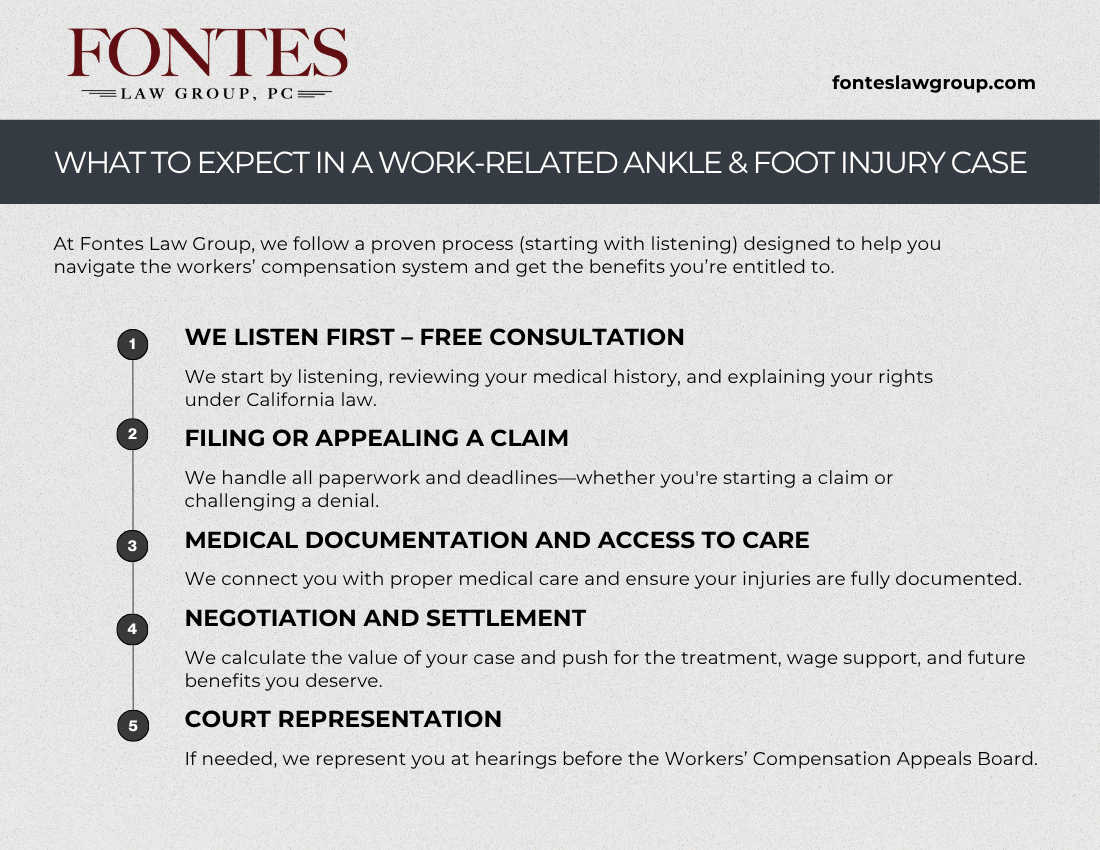
Work-Related Injury Timeline
Every ankle or foot injury claim moves at its own pace, but most California workers’ compensation cases follow a general progression:
- Initial claim and first medical visit: 1 to 2 weeks
- Medical documentation and diagnosis: 1 to 3 months
- Negotiation or settlement phase: 3 to 6 months
Throughout each stage, delays are common unless someone is actively pushing the claim forward. We stay involved at every step and work to keep your case moving while your treatment continues.
Understanding Legal Duties and Violations
California employers have a clear legal duty to maintain safe working conditions and respond promptly when an employee is injured. This responsibility is not optional. Under California Labor Code § 3700, employers must carry workers’ compensation insurance and comply with workplace safety requirements.
Employer responsibilities include:
- Providing slip-resistant flooring or footwear when conditions require it
- Keeping walkways clear, well-lit, and free from hazards
- Responding to injury reports and ensuring prompt access to medical care
- Training employees on safety practices and injury reporting procedures
- Maintaining valid workers’ compensation coverage for all workers
When employers fail to meet these obligations, workers are put at risk and legal consequences may follow.
Common Employer and Insurance Violations
We frequently see the same harmful practices after ankle and foot injuries, including:
- Failing to report or properly document workplace injuries
- Delaying or denying diagnostic testing such as X-rays or MRIs
- Refusing to provide basic safety equipment or fall protection
- Retaliating against workers for filing claims or taking time off to recover
At Fontes Law Group, we investigate these issues carefully. When employers or insurance companies cut corners or try to avoid responsibility, we take action to protect your rights and pursue full accountability.
Proving Your Case in California
To recover benefits, key legal elements must be established:
- Your injury is real and supported by medical records
- Your job duties caused or significantly contributed to the injury
- Your employer or their insurer failed to meet their legal obligations
We rely on medical evaluations, job descriptions, and detailed evidence to show how the injury occurred and why you are entitled to compensation under California law.
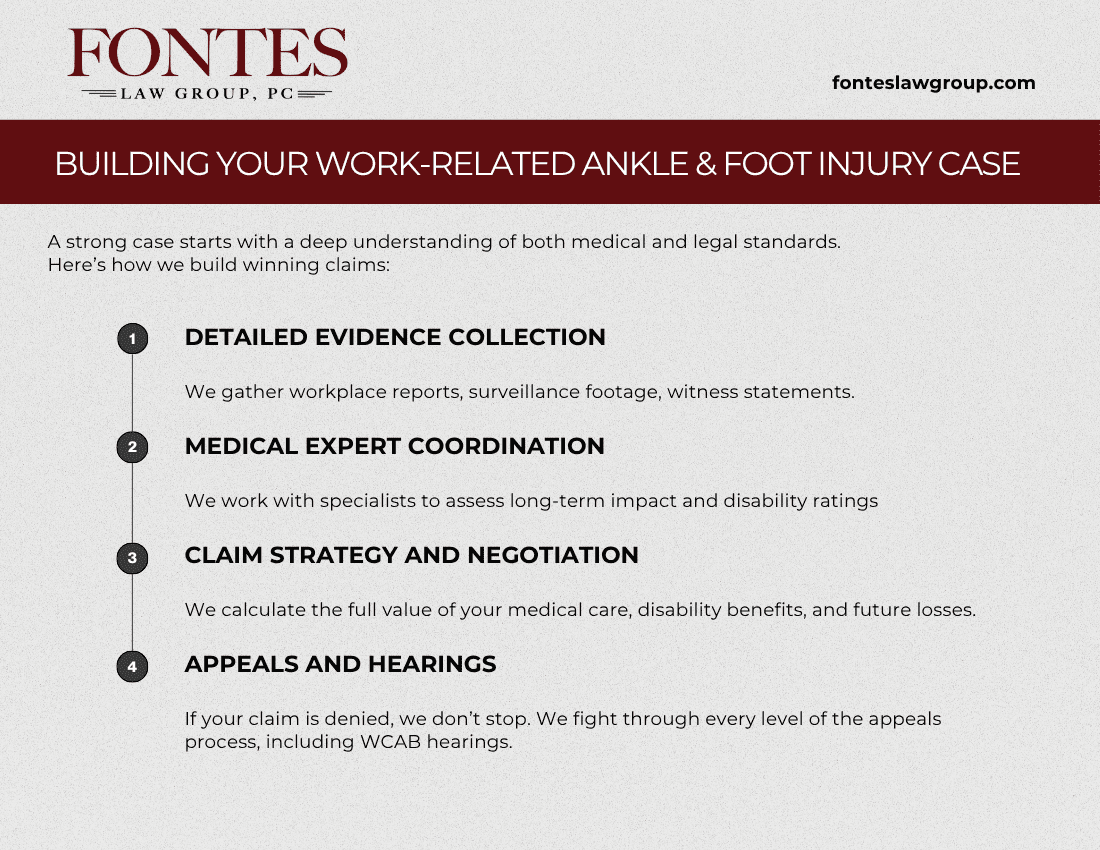
Compensation for Ankle & Foot Injury Claims
A successful workers’ compensation claim can provide the medical care and financial stability you need while recovering from an ankle or foot injury. At Fontes Law Group, we work to make sure your benefits reflect the true impact of your injury, not just the immediate costs insurers want to acknowledge.
Medical Treatment
You are entitled to all medically necessary care related to your work injury, including:
- Emergency care following the injury, such as ambulance transport or hospital treatment
- Diagnostic imaging, including X-rays, MRIs, or CT scans, to fully evaluate the damage
- Surgery or joint repair for fractures, torn ligaments, or dislocations
- Physical therapy or rehabilitation to restore strength, balance, and mobility
- Orthotics, braces, or mobility aids to support walking and standing
Your treatment should be based on medical need, not insurance company convenience.
Wage Loss and Disability Benefits
If your injury keeps you from working, compensation may include:
- Temporary disability payments to replace a portion of your lost wages
- Permanent disability benefits if the injury causes lasting limits on mobility, balance, or function
We make sure disability ratings reflect real medical findings and long-term impact, not minimized insurer assessments.
Additional Support and Long-Term Benefits
In more serious cases, workers may also qualify for:
- Vocational rehabilitation or retraining if returning to the same job is no longer possible
- Lump-sum settlements for permanent impairment, reduced earning ability, or chronic pain
Third-Party Personal Injury Claims
When someone outside your employer caused or contributed to your injury, such as a negligent contractor, property owner, or product manufacturer, you may have a separate personal injury claim. These cases can provide compensation for losses not covered by workers’ compensation, expanding the financial support available during your recovery.
FAQs About Ankle & Foot Injury
Q: How long do I have to report my injury?
You must notify your employer within 30 days and file a workers’ compensation claim within one year.
Q: Can I see my own doctor?
Generally, you’ll need to choose from your employer’s Medical Provider Network, but we can help explore any available exceptions.
Q: What if my job aggravated an old foot or ankle injury?
You may still qualify. If your job made the condition worse, you could be eligible for workers’ compensation.
Q: What if I was wearing improper shoes at the time of injury?
That doesn’t automatically disqualify you. We’ll investigate whether your employer provided appropriate guidance or safety gear.
Q: Can I return to light duty while I recover?
Yes, but only if your doctor approves and the job doesn’t interfere with your recovery. We can help enforce medical restrictions if your employer pressures you to return too soon.
Helpful Resources for California Residents
California Division of Workers’ Compensation (DWC)
California Department of Industrial Relations
California Employment Development Department (EDD)
Cal/OSHA Ergonomic Guidelines
Cal/OSHA Workplace Safety
Start Your Path to Recovery Today
Ankle and foot injuries may not always look severe, but they can take you off your feet and out of work for months. California law protects injured workers, but the system doesn’t always make it easy.
Let Fontes Law Group stand up for your rights, get your treatment approved, and fight for the benefits you deserve.
Request a free case review today.