



DACA in 2026: What California Recipients Need to Know Right Now
Deferred Action for Childhood Arrivals, commonly known as DACA, remains one of the most closely watched immigration policies in the country.
If you have DACA in California, every new immigration headline can feel like another reason to worry. Can you still renew? Is your work permit safe? Can you travel?
In 2026, DACA still exists, but it remains legally vulnerable. Current recipients can keep renewing their protection and work authorization, while first-time applicants remain stuck in ongoing litigation.
Here is what has actually changed, what hasn’t, and what to do about it.
Is DACA Still in Effect in 2026?
Yes. Current recipients can still request renewal of DACA and their Employment Authorization Document (EAD).
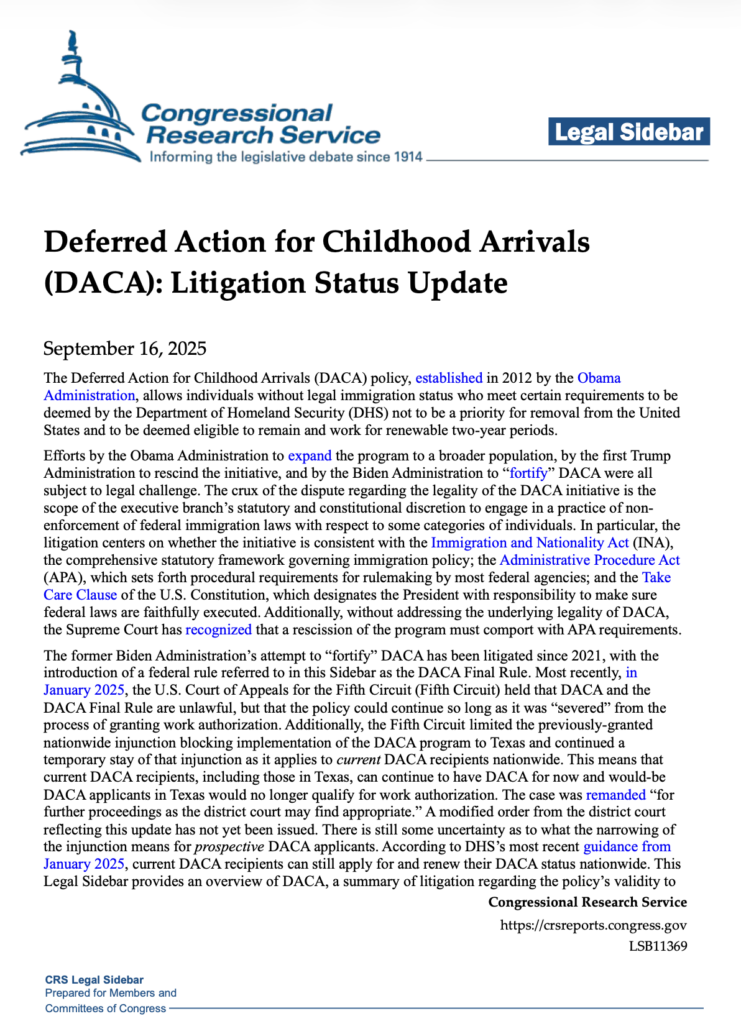
In January 2025, the Fifth Circuit Court of Appeals ruled parts of DACA unlawful, but narrowed the relief to Texas and preserved protections for existing recipients while litigation continues.
If you currently have DACA, you can still renew it.
California’s official DACA information confirms USCIS continues accepting and processing renewal, employment authorization, and qualifying advance parole requests for current recipients.
This could change as litigation continues, so rely on official sources rather than social media.
What About First-Time Applications?
USCIS still accepts initial DACA requests but, under the current court orders, is not adjudicating or approving them.
Someone who has never had DACA shouldn’t assume filing means approval is possible right now. If you’ve never had DACA, talk to an immigration attorney before spending money based on claims that “DACA is open again.”
Renewing DACA Is More Important Than Ever
Track the expiration date on your DACA approval and your EAD closely.
USCIS recommends filing 120 to 150 days before expiration, according to USCIS’s DACA guidance, to reduce the risk of a gap in status.
Don’t wait until the last minute.
Some recipients have faced long delays in 2026. A CNN report from May 2026 described recipients waiting months and losing work authorization while renewals sat pending. Even a brief gap can jeopardize a job or housing.
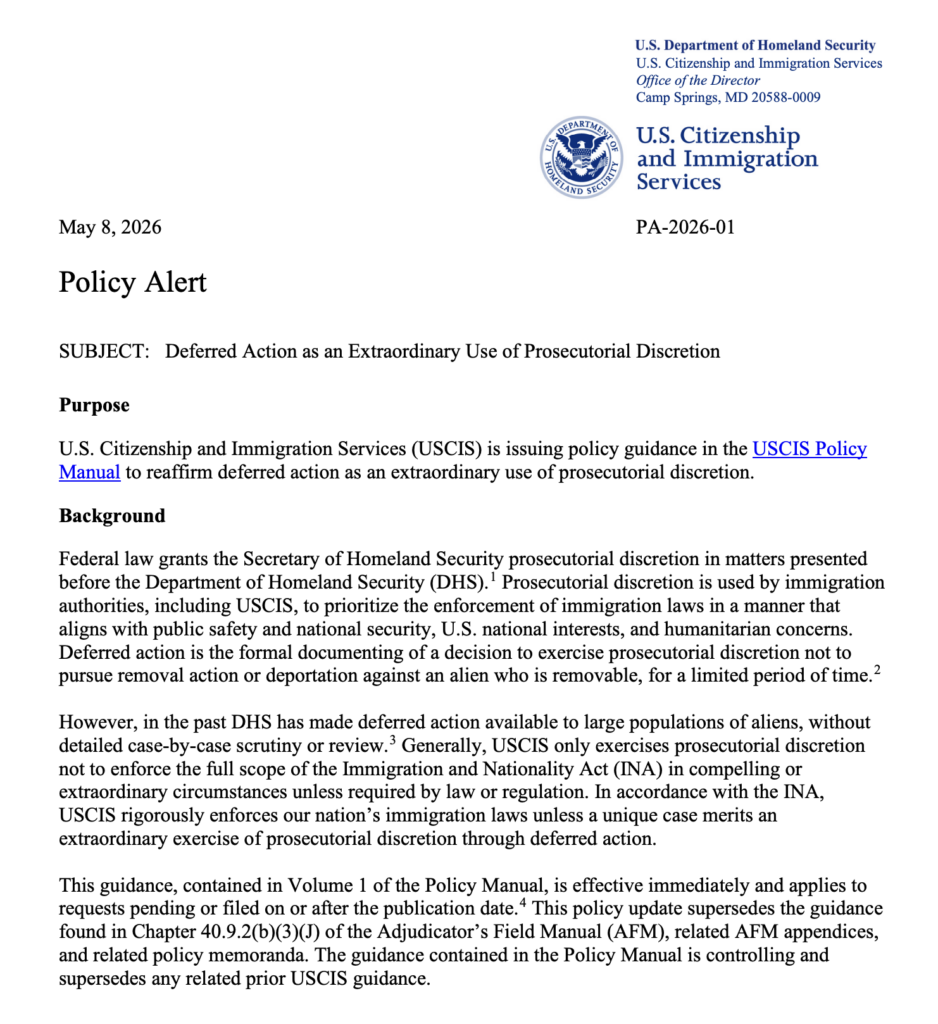
Adding to the uncertainty, USCIS issued new guidance on May 8, 2026 applying stricter, case-by-case discretion to deferred action, including renewals that were already pending.
USCIS aims to process renewals within 120 days; if pending more than 105 days, you can submit an inquiry through the USCIS Case Status tool or the e-Request system.
New USCIS Guidance Adds Scrutiny to Renewals
On May 8, 2026, USCIS issued Policy Alert PA-2026-01, reframing deferred action, including DACA, as an “extraordinary,” case-by-case form of discretion rather than a categorical benefit.
It does not rescind DACA or change eligibility criteria, but per the Presidents’ Alliance, it signals more restrictive review, applying to renewals already pending as of that date, not just new filings.
USCIS will weigh factors like immigration history, prior removal orders, and financial self-sufficiency, according to the National Immigration Law Center, and can still find deferred action “inappropriate” even if someone meets DACA’s basic requirements.
Most routine renewals shouldn’t be affected, but if anything unusual is in your background, talk to an attorney before filing.
Your Work Permit Stays Valid Until It Expires
A current, unexpired EAD continues to authorize work.
The Department of Justice has reminded employers that DACA recipients with valid EADs remain authorized to work, and employers can’t demand extra documentation or require disclosure of DACA status. A court ruling on DACA doesn’t give an employer permission to ignore a valid EAD.
Still, if your EAD is close to expiring, renewal timing matters enormously.
DACA Is Protection, Not Permanent Status
DACA is deferred action, not a green card or citizenship, and doesn’t create a path to citizenship.
If your circumstances have changed since you first applied, such as marriage to a U.S. citizen, a qualifying family member, or victim-of-crime status, you may have other immigration options worth exploring with an attorney, even after years of DACA renewals.
Can You Still Use Advance Parole?
USCIS considers advance parole case by case, according to the USCIS DACA FAQ, generally only for:
- Humanitarian purposes (medical care, a family funeral, a seriously ill relative)
- Educational purposes (academic programs or research)
- Employment purposes (assignments, conferences, interviews)
Vacations don’t qualify. Do not leave the U.S. simply because you have DACA, traveling without advance parole risks being unable to return, and can affect continuous residence.
If you have a prior removal order, unlawful presence, or other complications, get legal advice before booking travel.
California Resources Still Apply
DACA is federal, so California can’t guarantee the program continues, but state protections remain independent of federal litigation.
DACA recipients can apply for a California driver’s license or ID through the DMV.
On Medi-Cal, California’s January 1, 2026 changes restrict new full-scope enrollment for some immigration categories, but according to DHCS, DACA recipients remain eligible to apply for full-scope coverage, and existing enrollees can generally keep their coverage if they stay eligible.
See the California Immigrant Guide and California’s immigration resources for more.
Watch for Scams
Misinformation spreads fast when policy changes quickly. A claim that DACA “ended” or “reopened” doesn’t necessarily reflect your actual status. USCIS warns that no one can guarantee faster processing for a fee, that’s a scam sign.
Use official sources, and consult a qualified attorney for anything personal.
How Fontes Law Group Immigration Attorneys Can Help
Living with temporary protection makes long-term planning hard. Fontes Law Group helps individuals and families evaluate DACA renewals, advance parole, and other immigration pathways based on their actual circumstances.
With offices in Santa Ana and Riverside, our bilingual team serves immigrant families throughout Southern California in English and Spanish.

DACA is still here in 2026, but its future remains uncertain.
Renewals continue, key state protections remain in place, and qualifying recipients can still request advance parole, but first-time requests remain blocked and renewal delays make planning essential.
If your DACA is approaching expiration, delayed, or you’re weighing travel or other options, individualized legal advice can help you avoid decisions that are hard to undo.
Need help understanding your immigration options? Fontes Law Group offers bilingual immigration support from our Santa Ana and Riverside offices. Contact our team to discuss your situation.
This article reflects publicly available information as of August 2026. DACA remains subject to ongoing federal litigation, so rules and procedures may change.