

You’re ready to apply for a green card, and then someone asks, “Are you doing it here or at the consulate?”
That one question can feel huge. And in 2026, it really is.
There are two main ways to get a green card through family or work.
- Adjustment of status: you can apply from inside the United States
- Consular processing: you can go through an immigrant visa interview at a U.S. embassy or consulate abroad
For years, people chose based on where they lived and how long each path took.
This year, both paths changed. A new USCIS policy put adjustment of status under a much closer microscope. At the same time, the State Department paused immigrant visa interviews around the world.
At Fontes Law Group, our immigration attorneys help families figure out which path fits their situation.
What Is Adjustment of Status?
Adjustment of status lets you apply for a green card without leaving the country.
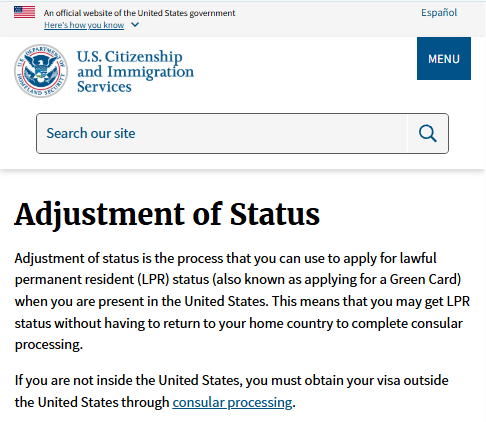
USCIS describes it as the process you can use when you’re already present in the United States. You file Form I-485 with USCIS, go to a biometrics appointment, and may be called in for an interview at a local USCIS office.
The legal basis is Immigration and Nationality Act Section 245 (8 U.S.C. Section 1255). Under that law, adjustment has always been a discretionary benefit, which means an officer can say no even when you check every box.
Basic Requirements for Adjustment of Status
- You were inspected and admitted or paroled into the United States (with limited exceptions)
- You’re eligible for an immigrant visa and admissible to the U.S.
- A visa number is available to you when you file
- You’re not blocked by one of the bars in Section 245(c), such as unauthorized work or failing to keep lawful status
There’s an important exception for immediate relatives of U.S. citizens. That means spouses, unmarried children under 21, and parents of adult citizens.
Section 245(c)(2) carves them out of the bars for unauthorized work and falling out of status.
That’s why many people married to U.S. citizens have been able to adjust even after overstaying a visa.
Why People Like Adjustment of Status
The biggest reason is simple. You stay home. You stay with your spouse and kids, and you can often apply for a work permit and travel document while the case is pending.
You also avoid one of the biggest risks in immigration law, which we’ll cover below: triggering a bar to reentry by leaving the country.
What Is Consular Processing?
Consular processing is the path for people who are outside the United States, or who choose to finish their case abroad.
The State Department’s immigrant visa process starts with an approved petition from USCIS.
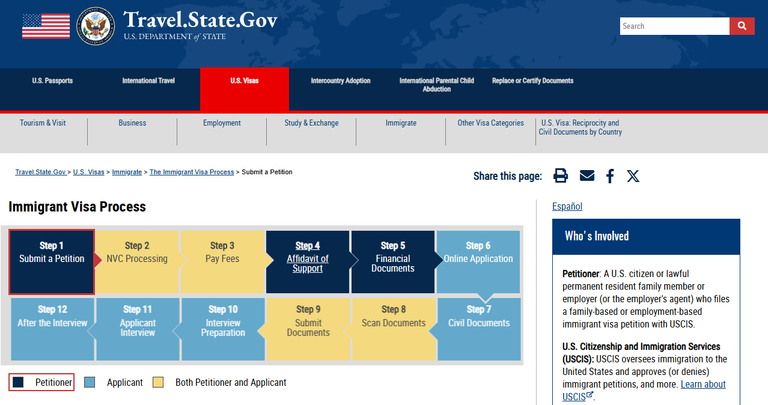
From there, the case moves to the National Visa Center (NVC), where you pay fees, submit the affidavit of support, upload civil documents, and fill out the online visa application.
Once the case is complete, the NVC schedules an interview at a U.S. embassy or consulate. If the visa is approved, you travel to the United States and become a permanent resident when you’re admitted at the border.
Basic Requirements for Consular Processing
- An approved immigrant petition, usually Form I-130 (family) or Form I-140 (work)
- A visa number that’s current under the Visa Bulletin
- A complete NVC file, including the affidavit of support and civil documents
- An interview, usually in your country of residence
When Consular Processing Makes Sense
If you live abroad, consular processing is usually your only option. It can also make sense for some people in the U.S. who aren’t eligible to adjust, as long as leaving won’t trigger a bar to coming back.
What Changed in 2026 for Adjustment of Status
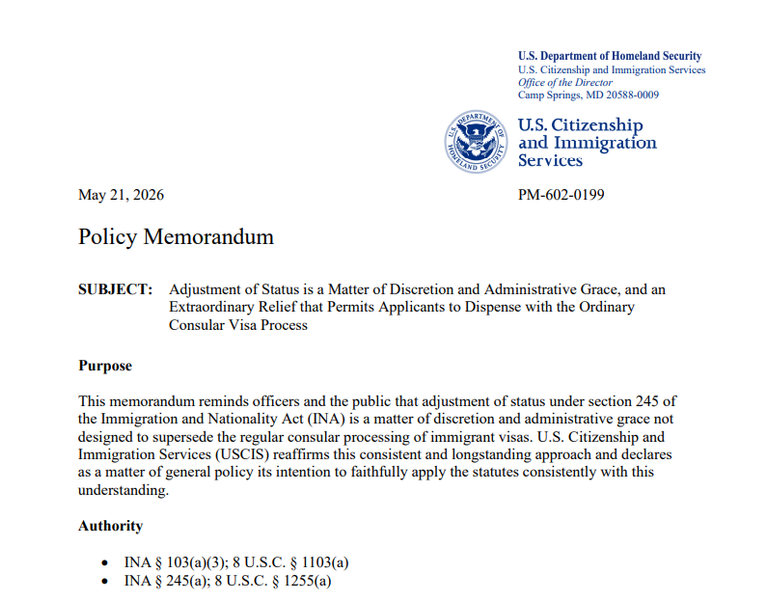
On May 21, 2026, USCIS issued a policy memo, PM-602-0199.
It tells officers to treat adjustment of status as “extraordinary” relief and to view consular processing as the normal route.
According to the complaint now challenging the policy, the memo directs officers to treat the choice to skip consular processing as a negative factor unless the applicant shows unusual or outstanding positive factors.
Meeting the eligibility rules may no longer be enough on its own. You’ll want to show the officer why your case deserves approval, with real evidence of your ties, your history, and your good character.
The memo didn’t change the law itself. Section 245 is still on the books, and eligible people can still file. But it changed how officers are told to use their discretion.
Fewer Second Chances to Fix Mistakes
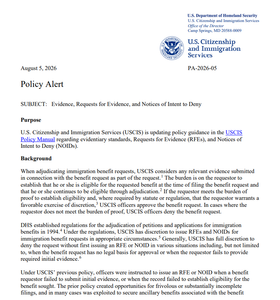
On August 5, 2026, USCIS added a second policy, PA-2026-05.
It gives officers broader authority to deny a case without first sending a Request for Evidence or Notice of Intent to Deny when required evidence is missing.
In the past, a missing document often meant a letter asking for it.
Now, it can mean a denial. And a denied adjustment application generally can’t be appealed, though a motion to reopen or reconsider may still be possible.
That’s why a complete, well-organized filing matters more than ever.
What Changed in 2026 for Consular Processing
Consular processing has had a rough year too.
In late August 2026, the State Department paused immigrant visa interviews at embassies and consulates so consular officers could be trained on updated public charge guidance.
Public charge is the rule that lets the government deny a green card to someone it believes will depend on certain public benefits. It comes from INA Section 212(a)(4) (8 U.S.C. Section 1182).
The State Department hasn’t announced a firm date for when all interviews will resume. If your case is waiting at the NVC, you may still be able to finish pre-interview steps, but the interview itself may be delayed.
So in 2026, there’s an odd tension. USCIS is steering people toward consulates, while the consulates are slowing down.
The Biggest Risk of Leaving: The 3-Year and 10-Year Bars
This is the part that catches families off guard.
Under INA Section 212(a)(9)(B), if you were unlawfully present in the U.S. for more than 180 days but less than one year and then leave, you can be barred from returning for three years.
If you were unlawfully present for one year or more, the bar is ten years.
Leaving the country for a consular interview is a departure. That means someone who could have adjusted here might lock themselves out for years by going abroad.
The Provisional Waiver Option
There’s a tool built for this situation.
Certain immediate relatives of U.S. citizens can file Form I-601A, the Provisional Unlawful Presence Waiver, before they leave for their interview.
You generally have to show that your U.S. citizen or permanent resident spouse or parent would suffer extreme hardship if you were kept out.
The waiver is approved before you travel, which takes away much of the guesswork. It only covers unlawful presence, though.
Other problems, like a past removal order or certain criminal issues, need a different plan.
How to Choose: Questions We Ask Every Client
There’s no single right answer for every family.
Here are the questions we walk through together.
- Where are you right now? If you’re outside the U.S., consular processing is usually the only route.
- How did you enter? Adjustment generally requires inspection and admission or parole.
- Who is petitioning for you? Immediate relatives of U.S. citizens have more flexibility than other categories.
- Have you ever been out of status or worked without permission? That can block adjustment for some categories.
- Do you have unlawful presence? If so, leaving could trigger a bar, and a waiver may be needed.
- Is a visa number available? Check the Visa Bulletin for your category and country.
- How strong is your evidence? Under the 2026 policies, the quality of your first filing carries a lot of weight.
- Can your family handle time apart? Consular processing can mean weeks or months of separation, especially with interview delays.
Choosing Adjustment of Status in 2026
If you’re eligible to adjust, you still can. But plan for a closer look. Gather proof of your relationship, your tax filings, your community ties, and anything that shows good moral character. Submit everything the instructions require the first time.
Choosing Consular Processing in 2026
If you’re going the consular route, prepare your NVC file carefully and build a strong affidavit of support, since public charge review is getting tougher. If you have any unlawful presence, talk to a lawyer about the I-601A waiver before you book a flight.
Speak With a Santa Ana Green Card Attorney
You don’t have to sort this out alone.
The rules changed fast in 2026, and a choice that made sense last year may not make sense now.
Fontes Law Group helps families in Santa Ana, Riverside, and throughout Southern California choose the right green card path and build a filing that holds up.
We’ll review your history, explain your options in English or Spanish, and help you avoid mistakes that can cost you years.
Call us at 714-571-0738 to schedule a consultation.
Helpful Resources
- USCIS: Adjustment of Status
- U.S. Department of State: The Immigrant Visa Process
- U.S. Department of State: The Visa Bulletin
- USCIS: Form I-601A, Provisional Unlawful Presence Waiver
- 8 U.S.C. Section 1255: Adjustment of Status
- 8 U.S.C. Section 1182: Inadmissible Aliens
Frequently Asked Questions
Q: Can I still apply for a green card from inside the U.S. in 2026?
Yes, if you’re eligible. The May 2026 USCIS memo didn’t remove adjustment of status from the law. It does mean officers will look harder at whether you deserve approval, so strong evidence matters.
Q: Is consular processing faster than adjustment of status right now?
Not necessarily. The State Department paused immigrant visa interviews in late August 2026 for public charge training, and hasn’t announced a firm restart date for all posts. Timing depends on your consulate and your category.
Q: If I’m married to a U.S. citizen and overstayed my visa, can I adjust?
Often, yes. Immediate relatives of U.S. citizens are exempt from some of the bars in Section 245(c), including overstaying. You generally still need a lawful entry. Under the new policy, your case may get extra scrutiny, so talk to a lawyer before filing.
Q: Will leaving the U.S. for my visa interview cause a problem?
It can. If you built up more than 180 days of unlawful presence, leaving can trigger a 3-year or 10-year bar. Some immediate relatives can apply for an I-601A waiver before they leave.
Q: What happens if USCIS denies my adjustment application?
A denial generally can’t be appealed, though you may be able to file a motion to reopen or reconsider. In some cases, you may still be able to pursue an immigrant visa abroad. Depending on your status, a denial can also carry other risks, so get legal advice right away.
Q: Does Fontes Law Group help Spanish-speaking families?
Yes. Our team is bilingual in English and Spanish, and we serve clients from our offices in Santa Ana and Riverside.
Bottom Line
Adjustment of status lets you stay home while your case moves forward. Consular processing finishes your case abroad.
In 2026, both paths got harder, and the wrong choice can mean a denial you can’t appeal or years locked out of the country.
The good news is that the right plan still works. Fontes Law Group helps families across Southern California pick the safest path and file it the right way, in English or Spanish.
Need help with your case? Call Fontes Law Group at 714-571-0738 or reach out through our website today.